

Simple Diet Change to Reduce Heart Disease Risk & Lose Weight
Making a small change to daily eating habits can support heart health, help reduce body fat, and may even improve long-term wellness. Cardiologists say this approach is simple, realistic, and does not rely on GLP-1 weight-loss drugs or any form of medication.
The focus stays on consistency rather than restriction, making it easier to follow over time.
A Cardiologist-Backed Calorie Adjustment
A key recommendation from heart specialists centers on reducing daily intake by just 300 calories. Research supported by the National Institutes of Health found that this modest cut lowered the risk of heart disease and diabetes, even among adults who were not obese.
Over a two-year period, participants lost an average of 16 pounds. Most of the weight loss came from body fat, according to the trial results. The study also highlighted improvements beyond the scale.
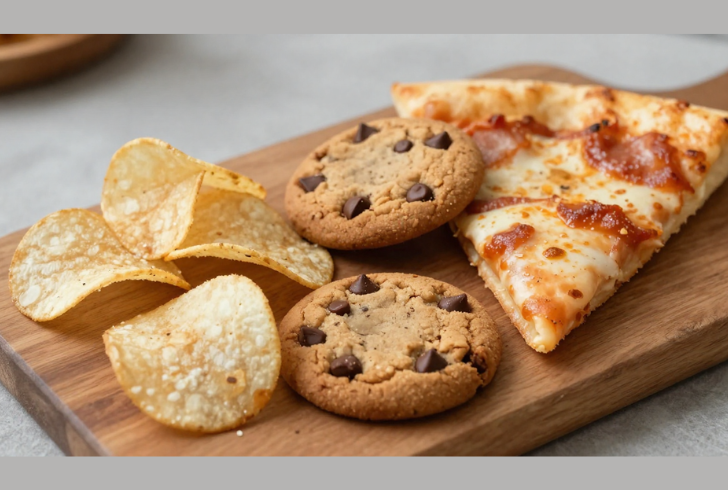
Freepik | Three hundred calories is roughly one slice of pizza, two cookies, or a small bag of chips.
Dr. William E. Kraus, lead author of the study, cardiologist, and professor at Duke University School of Medicine, described the change as realistic and manageable. “Cutting 300 calories a day is very doable,” Kraus previously told TODAY.com.
To put the number into perspective, 300 calories roughly equals one small bag of potato chips, two chocolate chip cookies, or a single slice of pizza.
Why a Small Cut Makes a Big Difference
Participants who reduced their calorie intake saw measurable health gains when compared with those who made no dietary changes. Waist circumference and blood pressure dropped, while LDL cholesterol and triglyceride levels improved. Markers of inflammation also showed positive movement.
Dr. Kraus pointed out that the benefits went beyond weight loss alone. “It’s not all just due to the weight [change],” he explained. “There is something else about restricting calories that seems to have benefits on cardiometabolic factors that we don’t really understand.”
These findings suggest that even a slight reduction in daily intake can influence how the body manages blood sugar, fat, and inflammation.
A Practical Way to Start
The first step recommended by Dr. Kraus is simple: stop eating after dinner. Avoid snacks and sugary drinks during late-night TV time and treat the last meal of the day as the final one.
“That will usually take care of the problem,” he told patients.
Late-night habits often add calories that the body does not use. Dr. Kraus has shared concerns about bedtime desserts, noting that those calories are more likely to be stored rather than burned.

Freepik | To prevent weight gain, Dr. Kraus recommends banning post-dinner snacks and desserts.
Registered dietitian Natalie Rizzo, nutrition editor for TODAY.com, has also warned that nighttime snacking can quietly add hundreds of calories. In many cases, hunger is not the driver. Fatigue and boredom tend to play a larger role.
Another effective tactic involves skipping a non-essential item that appears often in meals. Bread is a common example, typically adding about 100 calories per serving. Removing just a few small extras like this throughout the day can quickly reach the 300-calorie goal.
Building awareness around what 300 calories actually looks like can also help, especially when choosing ultraprocessed foods that pack a lot of energy into small portions.
A daily reduction of 300 calories offers a clear, science-backed path toward better heart health and steady weight loss. This approach avoids extreme dieting and focuses on simple habits that fit into everyday life. By limiting late-night eating, trimming non-essential foods, and recognizing calorie-dense choices, long-term benefits become more attainable without drastic changes.
More in Diet
-
`
 Dwayne Johnson Shocks Fans With Dramatic Weight Loss Transformation
Dwayne “The Rock” Johnson stunned the crowd at the 2025 Venice Film Festival with a slimmer look that set social media...
September 20, 2025 -
`
 Dwayne ‘The Rock’ Johnson Stuns Fans With Slimmed-Down MMA Fighter Look
Dwayne ‘The Rock’ Johnson isn’t just flexing muscles anymore. In “The Smashing Machine,” Dwayne Johnson strips down the bulk, sheds his...
September 13, 2025 -
`
 Here’s How Fat-Blocking Green Tea Microbeads May Aid Weight Loss
Scientists are exploring an innovative way to reduce fat absorption in the body—tiny edible beads made with green tea, vitamin E,...
September 12, 2025 -
`
 Why the Heart Is Slightly to the Left and Not Perfectly Centered
The heart is one of the most vital organs in the body, yet its placement often raises questions. Many assume it...
August 16, 2025 -
`
 Ozzy Osbourne’s Most Shocking and Beloved Pop Culture Moments
Few figures in rock history have carved out a legacy as vivid and unpredictable as Ozzy Osbourne. Beyond his groundbreaking work...
August 10, 2025 -
`
 Are Mono Diets Worth It – or Just a Dangerous Trend?
As summer brings on the pressure to slim down fast, the internet lights up with diet trends promising instant results. One...
August 3, 2025 -
`
 Why Motivation Is Essential for Sustainable Fitness Success
Motivation isn’t something that shows up when it’s convenient—it’s something that needs to be built, shaped, and sustained. Many people struggling...
July 27, 2025 -
`
 The Mystery of Human Body Parts That Science Still Can’t Solve
The human body is a patchwork of evolutionary choices, quirks, and mysteries. From skeletal structure to the tiniest gland, everything tells...
July 18, 2025 -
`
 Why a Mediterranean Diet and Exercise Slow Bone Loss in Seniors
Bone health isn’t just a concern for the elderly—it’s something that starts to matter the moment the body begins to lose...
July 12, 2025
You must be logged in to post a comment Login